
By Brad Sparling | Founder, Play Golf In College
Nobody in the golf industry wants to say this out loud. So I will.
Group lessons exist to serve the instructor. Not the player.
That is not a knock on every instructor running group sessions. Some of them are doing
their best with the model they have been given. But if we are being honest about what it
takes to develop an elite junior golfer, one who can actually compete at the college level and
beyond, group instruction is not going to get you there. The evidence is not even close.
The Pattern Is Undeniable
Look at any player who has reached the top of professional golf. You will find the same story
every single time. Long term, one on one coaching that started young and stayed
consistent.
Tiger Woods worked privately with Rudy Duran starting at age four. Almost exclusively one
on one. On the course. Not in a group. Scottie Scheffler has been with Randy Smith since he
was six. Jordan Spieth started with Cameron McCormick at twelve. Rory McIlroy has had
one coach, Michael Bannon, since he was eight. Collin Morikawa, same story with Rick
Sessinghaus since childhood.
Rickie Fowler. Justin Thomas. Phil Mickelson. Brooks Koepka. Xander Schauffele. Jon Rahm.
Every single one of them was developed through private, individualized coaching.
Not one of them credits group lessons.
That is not a coincidence. That is a pattern.
Why Group Lessons Fall Short
Every golfer’s swing is different. Every body is different. Every learning style. Every
competitive mindset. Elite development requires an instructor who knows the player deeply.
Someone who can see the difference between a mechanical issue and a mental one.
Someone who can adjust a practice plan based on what happened in last weekend’s
tournament. Someone who knows when to push and when to pull back.
In a group lesson, none of that happens. The instructor is managing a room. Giving general
tips. Making sure everyone feels like they got something out of it. The feedback is diluted.
The attention is split. The development is generic.
A group lesson teaches golf. A private coaching relationship develops a golfer.
Those are two very different things.
You Have to See Them Play
Here is something else most instructors will not do. Go watch their students play on the
course. In tournaments. Under pressure.
That is where the real development happens.
The driving range tells you what a swing looks like in a vacuum. The golf course tells you
who the player actually is. How do they handle a bad bounce on the third hole? What do
they do after a double bogey? Are they managing the course or just hitting shots? Do they
speed up when they get nervous? Slow down when they are ahead?
You cannot coach any of that from behind a hitting bay.
The best coaching relationships I have ever been part of, at Duke, at Ohio State, and over 16
years of running Play Golf In College, have always included on course observation as a
nonnegotiable. When I watch a player compete, I see things that never show up on a launch
monitor. Decision making. Emotional regulation. Course management. Competitiveness. The
stuff that separates a good ball striker from an elite competitor.
College coaches recruit the same way. They do not watch swing videos and offer
scholarships. They come to tournaments. They watch players manage 36 holes in the rain.
They are looking for the whole player. And you can only develop the whole player if you
actually go out and watch them play.
An instructor who never leaves the lesson tee is coaching half the game. Maybe less.
Who Actually Benefits from the Group Model?
The instructor does.
Group lessons are more efficient for the teacher. More students per hour. More revenue per
time slot. There is nothing wrong with running a business. But parents need to understand
what they are paying for. And more importantly, what they are not getting.
If your child is a beginner who just needs to learn grip, stance, and basic mechanics, a
group setting is fine. It is social. It is affordable. It is a reasonable introduction to the game.
But the moment your kid shows real potential, the moment the goal shifts from learning golf
to competing seriously, staying in a group environment is leaving development on the table.
At the junior golf level, where windows are short and recruiting timelines are real, that is time
you do not get back.
What Elite Instruction Actually Looks Like
In my 25 years of coaching, at Duke, at Ohio State, at the high school level, and 16 years of
running Play Golf In College, I have seen what works. The players who reach college golf,
who win state championships, who compete at the highest levels, all share one thing. They
had someone in their corner who knew them. Challenged them. Built a development plan
around their specific needs.
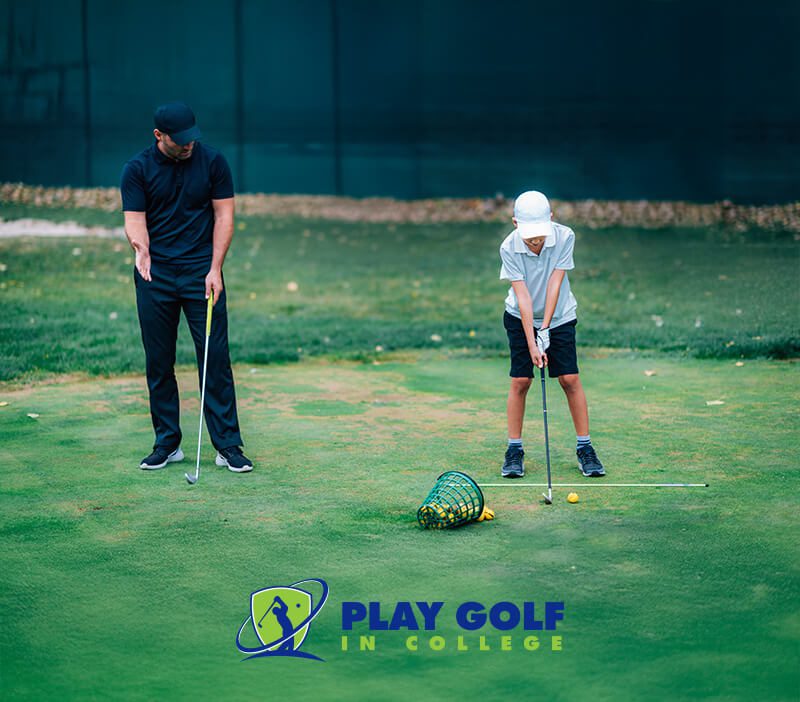
That means private instruction on the range. It means on course coaching where you
actually play alongside them and see how they think. It means showing up at their
tournaments and having real conversations afterward about what you saw. Not what a
scorecard says. What actually happened out there. And it means building a relationship over
years. Not sessions.
That is what private instruction provides. Not swing tips. A coaching relationship built on
trust, honesty, and accountability. A coach who tells you what you need to hear, not what
makes the hour feel good. A coach who knows your game on the range, on the course, and
under pressure. Because they have been there to see all three.
I have coached over 160 players into college golf programs. Nineteen individual state
champions. The number one high school team in the country. All three of my own kids
played Division I golf. Over 16 years of running PGIC, I have seen firsthand what separates
the players who make it from the ones who do not. It always comes back to the quality and
depth of the coaching relationship.
None of that happened in group lessons. And none of it happened without getting out on
the course.
The Bottom Line
If you want to play college golf, if you want to be elite, you need coaching that matches that
ambition. Find the right instructor. Invest in real, individualized development. And make sure
that instructor is willing to do the work beyond the lesson tee. Watch you play. Know your
game. Coach the whole player.
Group lessons have their place. But that place is not on the path to elite.
Brad Sparling is the founder of playgolfincollege.com and has spent 25 years coaching at
the college and high school level, including Duke University and Ohio State. Over 16 years
of running Play Golf In College, he has helped over 160 players reach college golf programs
with a 95% success rate